

Why do you need an identity guide?
Archived article with editorially revised content
A logo alone does not explain how the next publication, campaign or website should look. An identity guide describes the design system in practical terms and maintains consistency when other designers, printers or developers work with it.
What should it contain?
Show logo versions, clear space, minimum size and use on light or dark backgrounds. Define screen and print colours, typefaces, imagery and key layout principles. Examples for business cards, stationery, brochures, websites or vehicle graphics should reflect actual needs. A few well-chosen examples of incorrect use are helpful too.
A guide people will actually use
The document should not become a difficult rulebook. Keep it easy to navigate and include the location of master files, its version and the responsible contact. Update it when new applications or products are added rather than patching rules in several places. It is particularly valuable when several professionals share an identity: consistency no longer depends on personal memory.
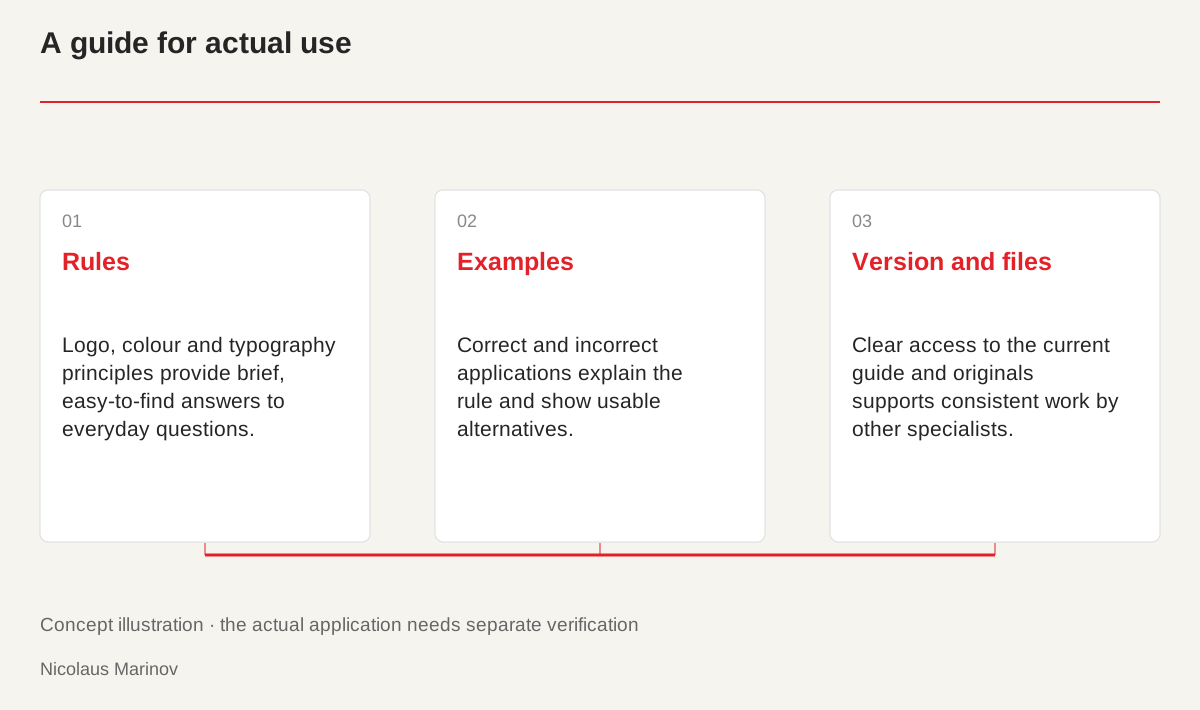
- Rules: Logo, colour and typography principles provide brief, easy-to-find answers to everyday questions.
- Examples: Correct and incorrect applications explain the rule and show usable alternatives.
- Version and files: Clear access to the current guide and originals supports consistent work by other specialists.
Answer the tasks people actually face
Organise the guide around its users’ questions. An employee may need the logo for a dark slide, a printer a colour specification and a developer the digital hierarchy. These answers should be easy to find. A document hundreds of pages long is not automatically better than a shorter, organised manual. Put essential rules first and group detailed production or application examples separately. File locations and contact responsibilities matter just as much as aesthetic explanations. This makes the guide useful in everyday work rather than merely a polished record of the original design project.
Put examples beside the rules
Explain clear space, typographic hierarchy and image cropping through concrete applications. Comparing correct and incorrect examples shows why a stretched logo or crowded header causes difficulty. Include usable alternatives rather than only prohibitions. If a long partner name does not fit a template, explain the permitted wrapping instead of leaving the user to invent a rule. The manual then helps people do the work, not just judge it afterwards. Occasional or unfamiliar applications particularly benefit from examples that make the intended relationship between elements visible and understandable.
Distinguish print from digital use
On a website, type sizes, buttons, focus states and mobile rearrangement are part of the identity. A printed business card cannot fully describe those requirements. Record digital roles and production colour data separately. Explain where values and sizes should be used as well as what they are. An additional colour may be an accent rather than a default background for every application. Materials need not look identical, but they should share their foundations. This preserves recognition without forcing different media into an unsuitable single layout or leaving essential digital states undocumented.
Establish versioning and responsibility
Identify the date, version and person who approves changes. Originals and templates should be available in one clear shared location. Older versions can remain archived but should not be mixed with the current package. Update the guide and related files together when another service or campaign is introduced. A short trial with a new employee reveals missing explanations. A functioning manual does not depend on the designer always being present. It supports independent, consistent use and provides a clear route for questions that fall outside the documented foundations.
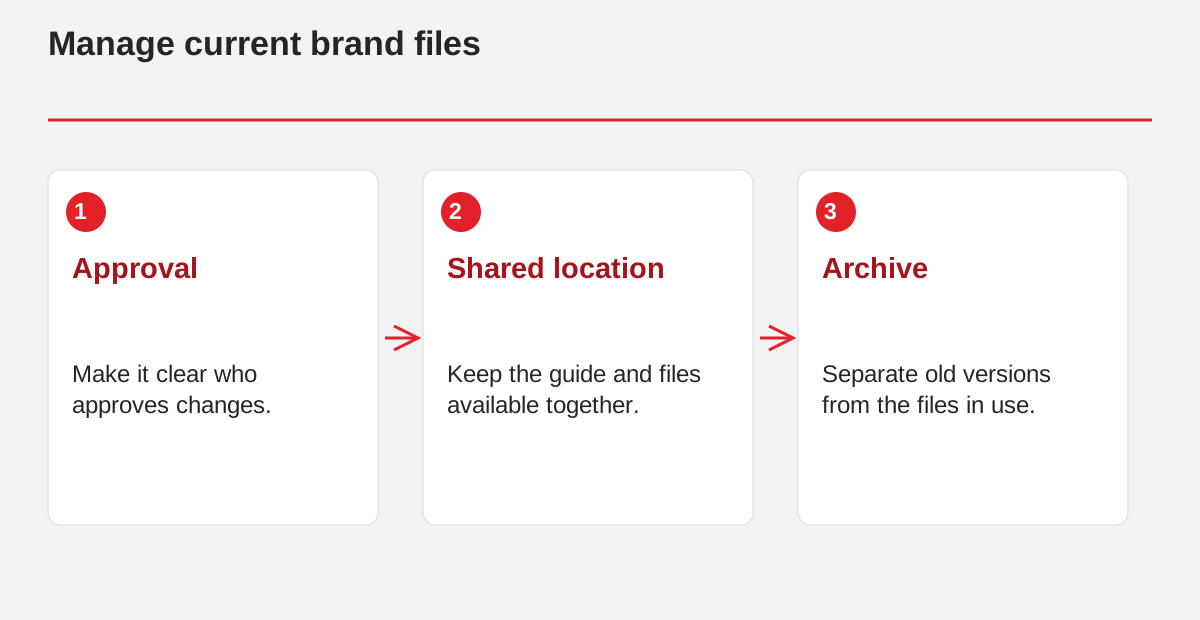
Manage current brand files.
- Approval: Make it clear who approves changes.
- Shared location: Keep the guide and files available together.
- Archive: Separate old versions from the files in use.