

Identity design: from an idea to a consistent appearance
Archived article with editorially revised content
Identity design connects a business’s objectives with its visible appearance. It starts not with choosing a fashionable typeface, but with understanding the service, the audience and the impression you want to create.
Clarify the direction first
A useful brief covers values, competitors, customer needs and actual applications. These inform the logo, colour palette, typography and imagery. A slogan is only needed when it adds something meaningful. Evaluate design proposals against the agreed objectives rather than personal taste alone.
The system becomes complete in everyday use
Business cards, stationery, websites, presentations and packaging have different tasks, yet should speak the same visual language. Good delivery includes original files, precise colour definitions and practical examples. Other professionals can then create future materials consistently. The identity’s value is visible when your idea remains understandable and recognisable at every important point of contact.
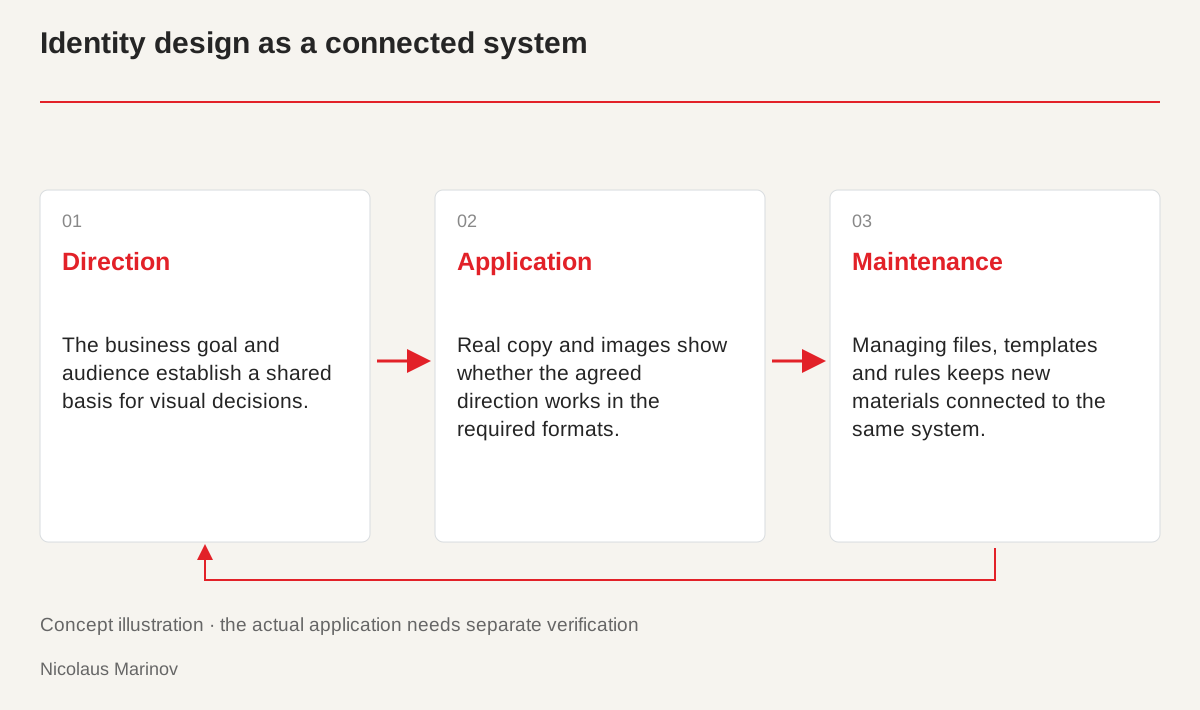
- Direction: The business goal and audience establish a shared basis for visual decisions.
- Application: Real copy and images show whether the agreed direction works in the required formats.
- Maintenance: Managing files, templates and rules keeps new materials connected to the same system.
Use the brief as a decision framework
A useful brief does not have to be long, but it identifies the situation to solve. Is this a new business, an additional service or a fragmented identity that needs organising? Who makes the buying decision, and which materials do they encounter? For a delivery business, packaging and mobile ordering may be more important than a long company brochure. These priorities direct time and budget towards necessary applications. Design then begins with a business and communication problem rather than a list of favourite colours. The brief establishes a shared reference for deciding whether later proposals answer the actual task.
Evaluate concepts in use
Show the initial direction in a few representative applications. The relationship between logo, typography and imagery is clearer in a website section or business card than in separate samples. Agree on the goal each option supports: a more approachable tone, stronger professional character or better recognition. Feedback should relate to those goals. Consolidate comments from different decision-makers so contradictory small changes do not determine the system. This makes it easier to explain why an adjustment is needed and how it supports the original brief. It also gives the team a clearer basis for approving a direction together.
Develop a usable set of materials
After approving the concept, prepare application variants and production-ready files. Web, print and editable versions need separate preparation alongside the foundations. Test the samples with long and short headings, original images and genuine contact details. A beautiful template is not enough if everyday copy does not fit. The handover should identify the approved original, explain which parts staff can edit and show when a specialist should be involved again. That information connects the design with continued use. It helps prevent the first new application from immediately departing from the system everyone agreed to follow.
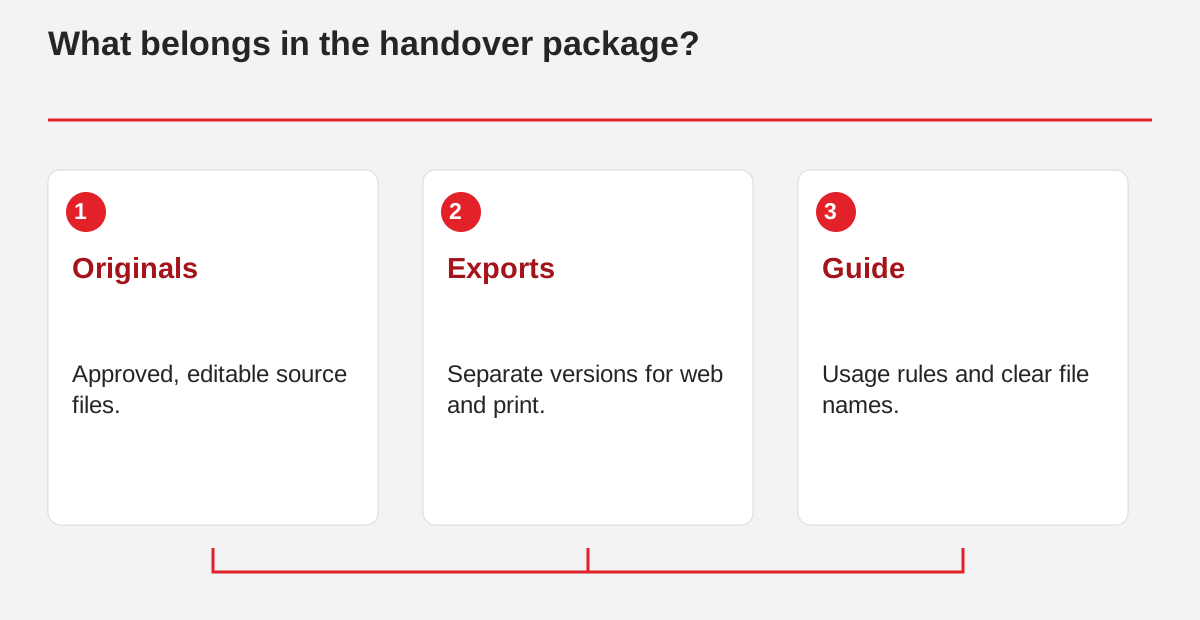
What belongs in the handover package?
- Originals: Approved, editable source files.
- Exports: Separate versions for web and print.
- Guide: Usage rules and clear file names.
Keep the identity coherent as it grows
A new campaign or service does not automatically need a separate miniature brand. Look for suitable elements in the existing system first. If another accent colour or image treatment is necessary, describe its role and conditions. The approved files and current version should be easy to find. Brief periodic reviews of the website, documents and social profiles can reveal discrepancies early. The outcome remains more than a finished presentation: it becomes a practical toolkit that supports the next stage of the business and can be used consistently by several people.