

Link building and search optimisation: SEO foundations
Archived article with editorially revised content
Content, technical operation and links are connected in SEO. The old advice to collect as many links as possible and repeat keywords constantly is misleading. A useful answer to the visitor’s intent matters more than an artificially inflated count.
A link should provide real help
Internal links connect related subjects, and their text should explain the destination. External links are valuable when they lead to relevant sources or genuine professional recommendations. Manipulative link buying and large-scale exchanges are risky. Social share counts cannot directly predict a search position either. The discontinued Google+ is no longer part of a current strategy.
Good content needs a working interface
Readable mobile text, accessible links, a stable layout and reasonable loading times matter. There is no universal one-second threshold that guarantees success below it and an automatic penalty above it. Measure the real user experience and fix broken links and indexing barriers. SEO is ongoing care in which useful, maintained content and a clear structure work together.
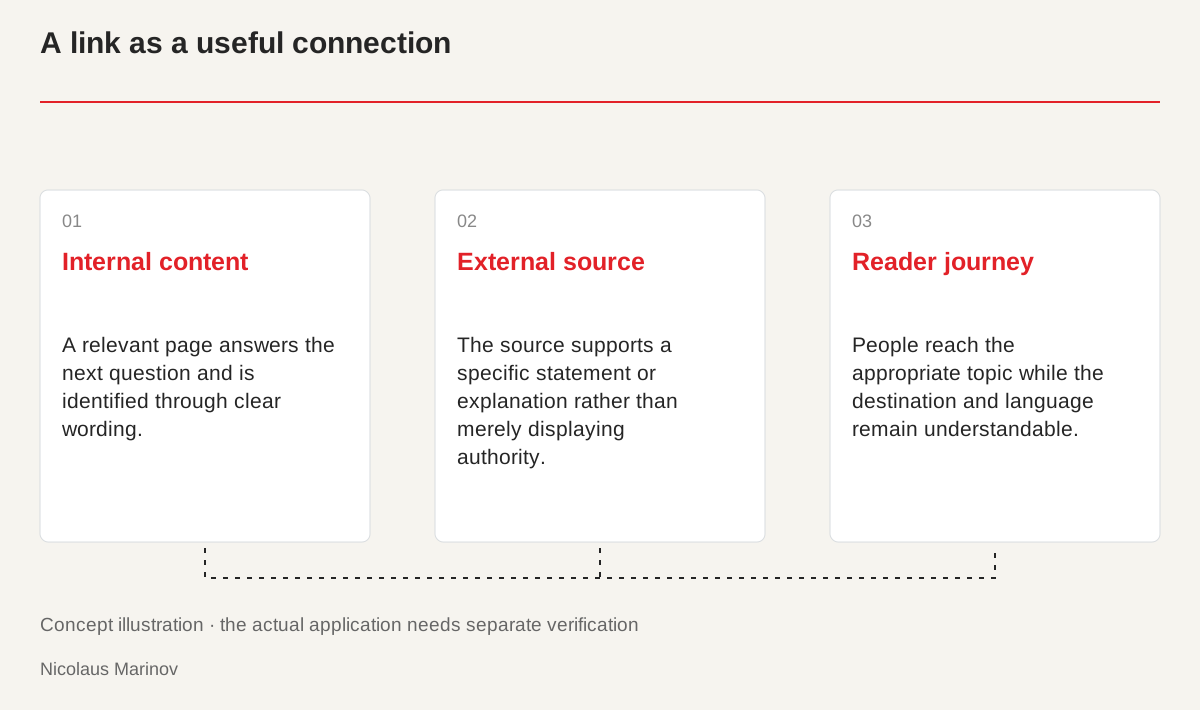
- Internal content: A relevant page answers the next question and is identified through clear wording.
- External source: The source supports a specific statement or explanation rather than merely displaying authority.
- Reader journey: People reach the appropriate topic while the destination and language remain understandable.
Build reading paths with links
An internal link helps when it leads to the reader’s next question. A logo article might naturally link to an identity manual or print colour management because those explain other parts of the same decision. Naming the topic is more useful than saying “click here”. Do not link every related page in every paragraph. A few justified references work better than crowded link lists. Relationships that make sense to visitors also clarify the site’s content structure. Treat linking as editorial work: a useful selection shows how texts belong together without repeatedly pulling readers away from the current explanation.
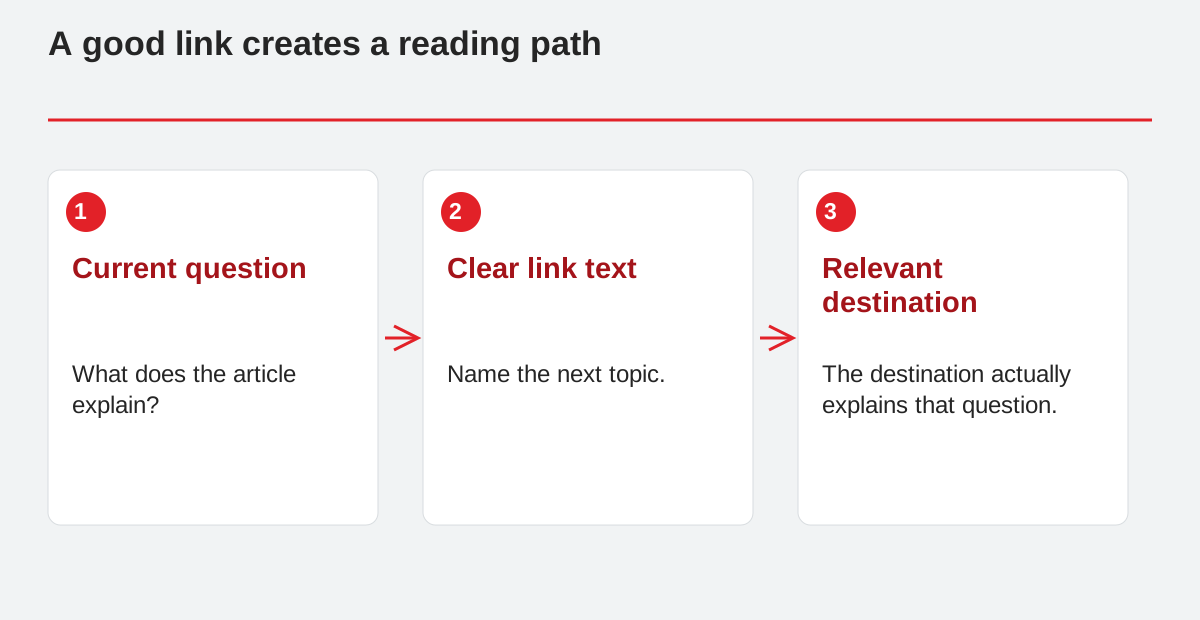
A good link creates a reading path.
- Current question: What does the article explain?
- Clear link text: Name the next topic.
- Relevant destination: The destination actually explains that question.
Make external sources relevant
Link to official documentation, a detailed professional analysis or the original presentation. Check whether the source supports the specific statement beside it. A respected organisation’s homepage does not automatically answer the question. Review links periodically for changed or missing destinations. Context matters for incoming links too. A genuine partner presentation is easier to understand than numerous automatic recommendations from unrelated sites. Paid or advertising-related links need the treatment required by search guidelines. The purpose is to add useful context, not manufacture as many connections as possible regardless of what readers gain from them.
A visit is not automatically a customer
An article can attract people who are not currently looking for a service provider. That is not inherently a failure: professional content can inform and support trust. Provide a natural route to the related service when readers genuinely need help. Link wording should not promise something different from the destination. Distinguish reading activity from contact enquiries when measuring results. This avoids expecting every page to deliver the same outcome or replacing an assessment of its purpose with raw traffic totals. Connecting a topic with a service can be useful without turning every paragraph into another sales prompt.
Run a manageable link audit
Start at the homepage and try to reach important services and articles. Note dead ends, incorrect destinations and unclear labels. Check that internal navigation preserves the selected language. During a move, old article addresses should lead to matching new articles rather than sending every URL to the homepage. Review corrections in small groups and update the link on its source page too. Well-maintained relationships support visitors rather than simply increasing a technical score. They make useful information accessible and connect it in a way people can understand.